










The Art of the Dried Flower Bouquet
Published :
2026-02-26 08:30:36
Categories :
Trends
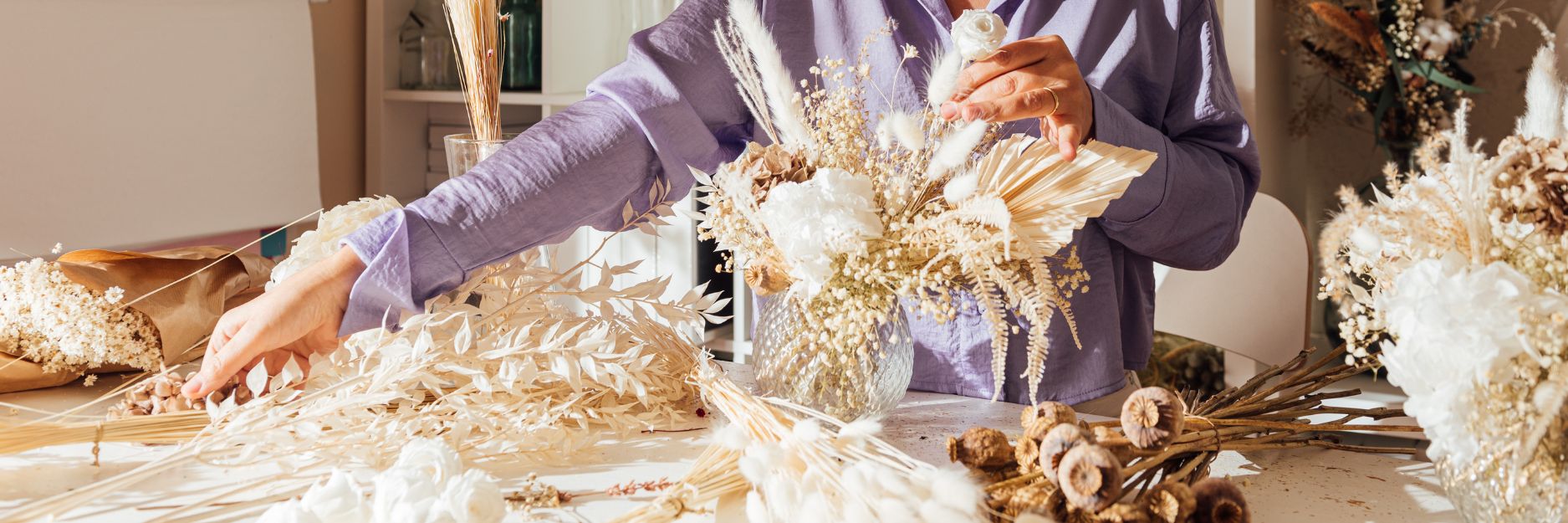
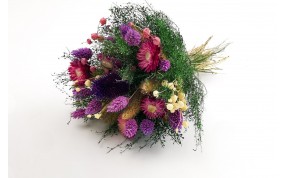
Creating a dried flower bouquet is a true act of controlled creativity, halfway between floral art and object design. Behind the apparent simplicity of these long-lasting arrangements lies a complex reflection on volumes, colors, and textures — but also on their final purpose, whether for event décor, a focal point in a boutique, or a signature piece in a workspace.
This subtle balance relies on a strong command of plant materials — flowers, fruits, foliage, grasses — as well as a sharp eye capable of anticipating the bouquet’s visual and sensory impact within its environment. A dried flower bouquet is never isolated: it interacts with space, light, and the surrounding style. This art of precise balance is what we explore here, offering practical insights to help you design bouquets that are both harmonious and impactful.
Why are dried flower bouquets so appealing to professionals?
The growing popularity of dried flowers is not solely due to their bohemian aesthetic or natural look. For decoration professionals, they meet a dual requirement: offering greenery without constraints while creating lasting emotion. Unlike fresh flowers, dried arrangements require no watering, refrigeration, or regular replacement. They can be prepared in advance, transported without special precautions, and reused across multiple projects or seasons.
This practical advantage is especially valuable for event decorators, florists seeking added value, floral design agencies, and retail brands wishing to anchor their image in a natural and on-trend aesthetic.
Dried flowers also allow great creative freedom. By combining raw textures such as grasses with preserved foliage or delicate blooms like immortelles or statice, you can achieve rich, dynamic, almost sculptural compositions.
Structuring a bouquet: key plant families to know
Creating a successful dried flower bouquet relies on a clear botanical structure. Generally, four major families of elements can be distinguished: flowers, flowering foliage, grasses, and structural foliage.
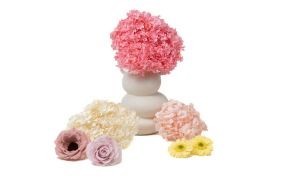
Flowers represent the emotional core of the bouquet. They attract the eye and define its personality. Dried roses, hydrangeas, immortelles, lavender, or yarrow — each brings a distinct shape, color, and intensity. Using too many can compromise overall elegance, while too few may make the bouquet insignificant. Learning how to balance them is essential.
Next comes foliage, often including preserved eucalyptus, ruscus, or ferns. It surrounds the flowers, creates a setting for them, and ensures a smooth transition to the other elements. Foliage provides visual unity and cohesion.
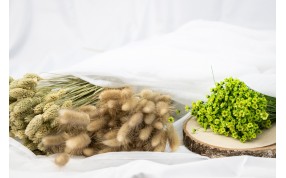
Grasses act as the breath of the bouquet. Light, airy, and slightly blurred, they soften rigidity and add volume without heaviness. Lagurus, phalaris, setaria, or oats add soul and a touch of untamed naturalness highly sought after in modern compositions.
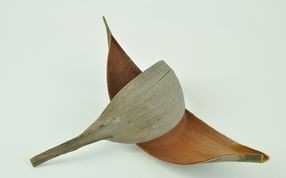
Finally, structural foliage — such as palm leaves, palm spears, or eucalyptus populus branches — gives the bouquet its overall shape. It defines its silhouette, axis, and ensures clarity. These elements provide visual stability, particularly when the bouquet is intended as a standalone decorative piece.
The art of balance: mastering density
Density is central when composing a dried flower bouquet. Too compact, and it feels rigid and suffocated. Too airy, and it loses impact and appears unfinished. There is no universal formula, but professional guidelines can help.
A bouquet designed as an event table centerpiece should remain light and unobtrusive, adding a botanical touch without hindering conversation. Lower arrangements with moderate density and emphasis on width rather than height are ideal.
Conversely, a bouquet created for a retail space or hotel can adopt greater density to create immediate visual impact. Larger volumes, a denser base supported by structured foliage, and varied heights enhance the “wow” effect.
For wall-mounted or structural installations, such as floral arches or suspended pieces, density can vary. Alternating dense areas with breathing spaces creates rhythm and ensures strong visual presence from multiple angles.
Decorative applications: expanding formats and styles
One of the main strengths of dried flower bouquets in a professional context is their versatility. Their durability allows them to be adapted into numerous formats, from classic to bold.
Decorative vases remain a key display option, offering a warm and natural focal point in stores, reception areas, or waiting rooms. Increasingly, professionals are exploring alternative formats: glass domes, wall wreaths, framed botanical pieces, or cloud-like hanging installations.
In event design, dried bouquets become scenographic objects in their own right. They dress structures, buffets, photobooths, or ceremony backdrops. Lightweight and easy to handle, they can be assembled on-site or transported ready to use.
For retail or gifting purposes, dried bouquets can be miniaturized, personalized, packaged as DIY kits, or integrated into gift boxes. This trend appeals strongly to independent boutiques and concept stores seeking natural, local references without logistical constraints.
Pro tip: think in ranges and storytelling
A good bouquet tells a story — especially in B2B projects. To strengthen your creations, organize them into coherent ranges: by color palette (terracotta, nude, pastel, autumnal), inspiration (English garden, mineral desert, enchanted forest), or seasonal collections.
At Phocealys, we also recommend integrating preserved plants into your bouquets. This adds supple greenery closer to living plants while maintaining the advantages of dried materials. Our preserved foliage collections blend perfectly with mixed compositions.
Preparing professional kits — semi-finished bouquets, themed packs, modular compositions — also helps you gain efficiency while ensuring stylistic consistency across projects.
What if we started from the end?
Creating a dried flower bouquet is not about stacking stems. It is about staging balance, shaping a sensation, composing a botanical piece with high added value. To the untrained eye, it may seem simple. But for professionals, every element matters: density, orientation, harmony, and purpose.
By understanding plant families, proportions, and practical uses, you transform a simple floral object into a long-lasting emotional vector. The bouquet becomes a strategic tool to enhance a space, express a brand identity, or elevate an event.
This is the real challenge of modern plant decoration: combining aesthetics, durability, and intention.
At Phocealys, we are proud to provide you with the right materials to inspire you to the fullest.
Partager cet article

-
 COMMITMENT PRICE QUALITY
-
 EXPERTS AT YOUR SERVICE
-
 RESERVED FOR PROFESSIONALS
-
.png) QUICK DELIVERY
QUICK DELIVERY
-
 SECURED PAYMENTS