







Botanical Event Decoration: 5 Fire Safety Rules to Keep in Mind
Published :
2026-11-03 10:46:50
Categories :
Trends
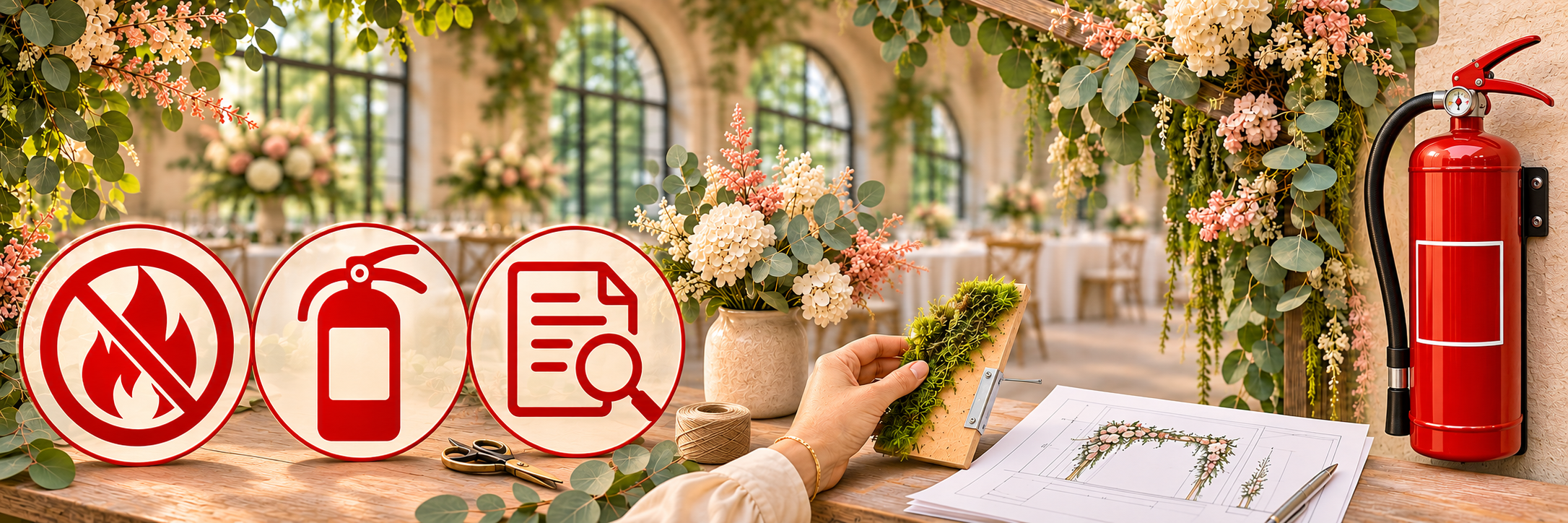
A botanical arch, a floral photo backdrop, an immersive display or a suspended arrangement: botanical decoration gives an event its identity and transforms the visitor experience.
But before selecting foliage, flowers or supports, one consideration needs to be built into the project: fire risk and the requirements that apply to the venue.
In France, temporary installations in premises open to the public, known as ERP (Établissements Recevant du Public), must also take safety regulations into account. Requirements vary depending on the premises and the configuration of the display. Fire safety should therefore be part of the creative brief from the outset.
Here are five rules to keep in mind when designing botanical event decorations.
1. Include the venue’s requirements from the start of the project
Fire safety should not be checked only once the display is ready to install. It can influence the choice of botanical materials, the dimensions of the design, its location and how it is secured.
Before finalising a proposal, speak with the venue manager to identify the applicable requirements and the supporting documentation needed. This helps guide creative and technical decisions before purchasing materials and starting production.
A wall-mounted installation, a freestanding arch and a suspended display raise different questions. Present the project in sufficient detail, including the proposed materials, dimensions, quantities, supports and layout.
Key takeaway: including ERP requirements in the brief helps you anticipate adjustments rather than modify a finished creation.
2. Choose botanical materials to suit the planned display
Artificial foliage, dried flowers, preserved moss or lichen: aesthetic choices should go hand in hand with checking suitability for the intended use.
The type of botanical material alone does not determine the applicable requirements. The quantity installed, the area covered, the location and the installation method also matter.
Before choosing a product, request the available documentation and check that it corresponds to the exact reference selected. If a fire-retardant treatment is being considered, check its compatibility with the botanical material and the conditions required for its application.
Our article on fire safety and botanical decoration in French ERP premises outlines the main regulatory principles for a closer look at these issues.
Key takeaway: choose a material for its appearance and its actual conditions of use.
3. Check the reaction-to-fire classification of the installed system
An M1 or M2 certificate for an individual material does not automatically guarantee the compliance of the final installation.
A botanical creation often combines several components. The classification of foliage, moss or lichen does not automatically extend to the backing, adhesive or structure used to build the display.
The project assessment may therefore also consider:
- the backing or substrate;
- adhesives and fixings;
- the structure;
- the total installed surface area;
- the installation method;
- the location within the premises;
- the overall fire load.
For example, preserved moss classified M1 and attached to a combustible wooden panel using an adhesive not covered by the supporting documentation does not automatically make the complete assembly M1-classified.
Check precisely what the classification report covers: the material alone or a defined assembly, together with its mounting and use conditions. If the project falls outside this scope, the supporting documentation should be reviewed with the relevant professionals.
Key takeaway: the stated classification must correspond to what is actually installed, under the conditions specified in the technical documentation.
4. Adapt the volume and layout to the venue
In event decoration, visual impact often comes from abundance: generous foliage, dense arrangements, large botanical surfaces or overhead installations.
These choices need to be assessed in their setting. Beyond the properties of each material, the quantity of combustible material and its distribution are also factors to examine.
The layout must also preserve circulation routes, exits and access to fire safety equipment. An arch, a plinth or an overhanging arrangement must not reduce the required widths of escape routes or interfere with the operation of doors.
Include these requirements in the layout plan, taking furniture and the actual organisation of the event into account.
Key takeaway: the safety of a botanical display also depends on its volume and its position within the space.
5. Check that the installed display matches the assessed project
A substituted product, a different backing, a larger botanical surface or an additional suspended element can alter the conditions originally assessed.
Before opening to the public, check that the installation matches the project presented and the materials’ specified conditions of use. Any change that could affect safety must be reported to the venue manager to determine whether a further assessment is needed.
Keep the supporting technical documentation available and record the product references used. This traceability makes discussions with the venue and those responsible for inspections easier.
For reused displays, repeat this check with every new installation: the same element may be used in very different configurations from one event to the next.
Key takeaway: checks must cover the display as actually installed, not just the initial proposal.
Whether for a product launch, a reception or a Christmas display, incorporating fire safety from the design stage helps create a project that works within the requirements of its venue.
Planning a botanical event display? The Phocealys team can help you choose product references and provide information about the available supporting documentation, based on the requirements communicated for your project.
Partager cet article
-
 COMMITMENT PRICE QUALITY
-
 EXPERTS AT YOUR SERVICE
-
 RESERVED FOR PROFESSIONALS
-
.png) QUICK DELIVERY
-
 SECURED PAYMENTS